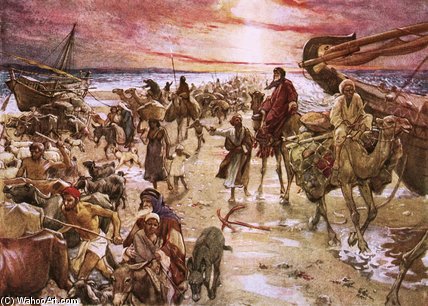
Every spring, beginning on Nissan 15, Jewish families and communities around the world participate in a weeklong holiday memorializing their rescue from Egypt.
And ye shall observe this thing for an ordinance to thee and to thy sons for ever. And it shall come to pass, when ye be come to the land which the Lord will give you, according as he hath promised, that ye shall keep this service. And it shall come to pass, when your children shall say unto you, What mean ye by this service? That ye shall say, It is the sacrifice of the Lord’s passover, who passed over the houses of the children of Israel in Egypt, when he smote the Egyptians, and delivered our houses. And the people bowed the head and worshipped.” Exodus 12:24–27
In the week leading up to Passover Jewish homes are scoured top to bottom in an incredibly intense spring cleaning to rid the home of all “chametz” or leaven, which represents the “swelling of ego that enslaves the soul more than any external prison”. This practice is rooted in the unleavened bread that was eaten during the exodus and God’s instructions in Exodus 12:15; “seven days you shall eat matzah, and on the first day you should remove all se’or (sourdough, a leavening agent) from your homes. Anyone who eats chametz (leaven) from the first day to the seventh day shall be cut off from Israel.”
The entirety of the Passover holiday lasts an entire week (or eight days outside of Israel), with the first night being when they left Egypt, and the final night is when the Red Sea was crossed. On the first two nights the Passover meal is eaten, which is an elaborate and symbolic ritual meal where the story of the exodus is recounted. Then on the final two days of the Passover week Orthodox Jews observe a second seder meal that looks to the final redemption of the Messiah.
There is a teaching in Rabbinic Judaism that Passover was established by God long before the events of Exodus and that not only was Abraham aware of the festival, but Isaac was also born on Passover. This will likely make sense to Latter-day Saints as we believe that the gospel was known to Adam and Abraham and that the temple, and its holidays and rituals, were established to teach mankind about Christ.
For several centuries after Christ Christians continued to observe Passover in some way. Bishop Polycarp, who was a disciple of the Apostle John, attested that the observance of Passover was something the Apostles had taught them to do. The extent to which the celebration followed the same customs as the Jewish Passover varied by community and changed over time. After the fourth century the Church declared that any group that continued to observe “Pascha” according to the Jewish calendar and customs, rather than “Easter” according to the Gregorian calendar and the Christian customs that had developed over the centuries, were to be excommunicated. This was a reflection of how bitter the relationship between the Christian church and the Jewish people had become.
Learn More
- Why are there two Passovers on the Jewish Calendar?
- Why is it celebrated for two days instead of the one commanded?
- How do Jews feel about Christians having Seders?
- Women are pivotal to the story of the Exodus – Get to know the women of Passover
- Did Abraham celebrate Passover?
- Elijah’s coming at Passover – Fulfilled at Kirtland
- Were Nephite Prophets familiar with Passover?
Celebrating Passover
Spend the week before Easter deep cleaning the home – reflect on all the things we have and consume that can be a distraction from focusing on Christ. If you had to “flee Egypt” today, what would you take with you and what would weigh you down?
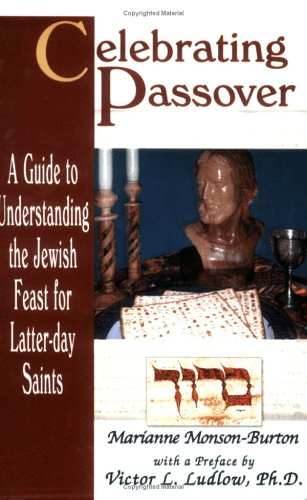
Host a Passover Dinner, there are many Christian Haggadah’s available – a place to start is the Haggadah to the left or this one.
YouTube Videos
Header Art: The Passage of the Red Sea, Willaim Brassey Hole

 Discovering the Saints
Leave a comment