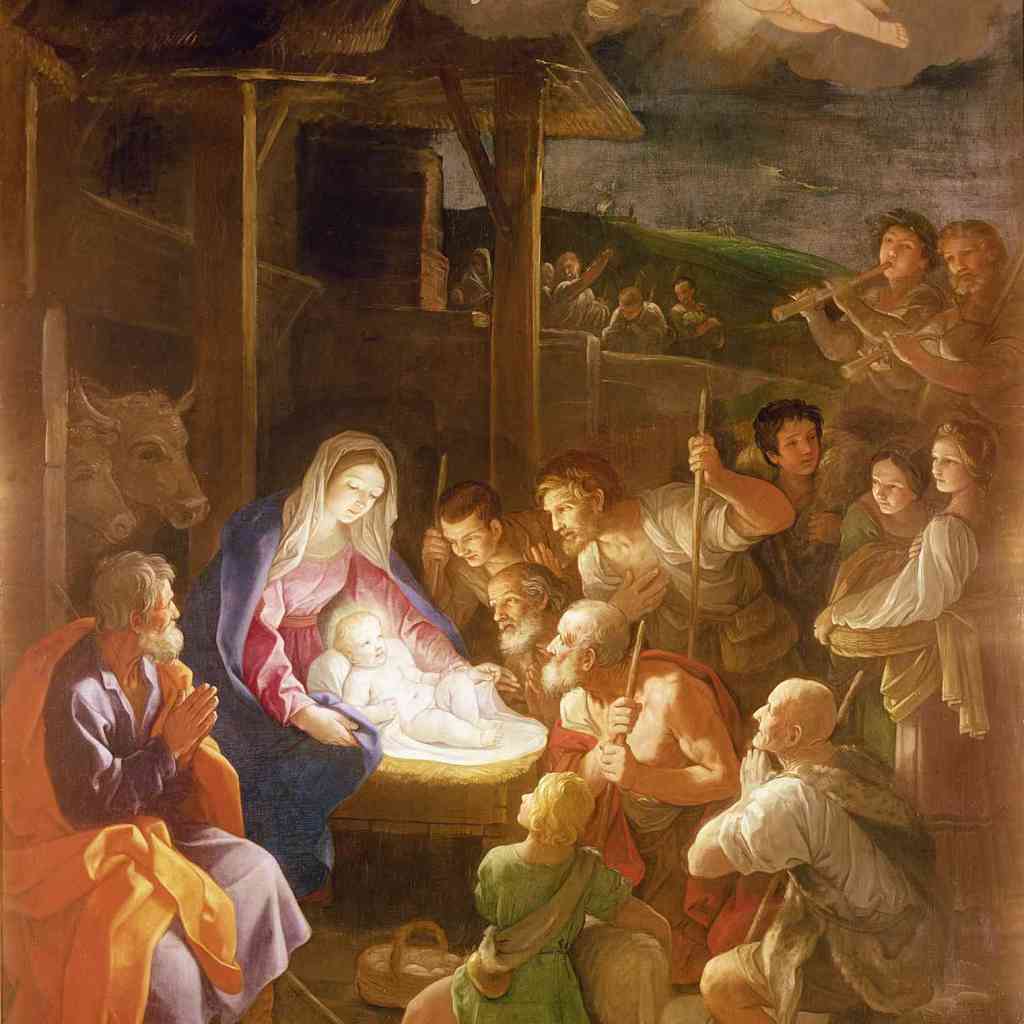
If you’ve ever been told that the reason we celebrate Christmas on December 25 is because Christianity co-opted the pagan winter solstice or Roman celebration of the sun “Sol Invictus” you may be relieved to know that the decision to set Christmas on December 25 had absolutely nothing to do with either of those things.
The exact date of Christ’s birth was not known to the early church because Judaism traditionally doesn’t celebrate birthdays and the early Church Fathers taught that celebrating a birthday (especially of a deity) was something pagans do. But that didn’t stop speculation. Clement, his student Hippolytus, and others write that that by their day at the end of the 100’s several dates had already been proposed and discussed. May 20, March 25, January 6, and December 25 being the most common. There was no consensus and different communities observed different days and their worship revolved around either Easter or the Baptism of Christ, the nativity was incidental to these celebrations.
These days were all proposed based on what calendar (Jewish, Roman, African, other) the community used and when they celebrated Easter. The most common reasoning for establishing the date of the nativity was based on the belief that Christ died on the same day he was either born or conceived. By the time the western church began to celebrate the nativity as its own holiday in the mid 300’s December 25 was the preferred date. At that time there were heretical groups teaching that Christ was a created being, not eternal, and not divine having been elevated to Messiah only at his baptism. This made emphasizing the incarnation of the eternal Christ at conception an important theological point. So if Christ incarnated on March 25 (based on dating proposed from John’s gospel or alternatively based on the belief that he was conceived and died on the same date) his birth 9 months later falls on December 25.
In comparison the Roman cult of Sol Invictus was imposed by the Emperor in the year 274 and was never very popular, after debates about the dating of the birth of Christ had already long proposed December 25 as a possibility. The winter solstice was also never widely celebrated as a Roman holiday and so is also just coincidental and was never a factor in the ancient arguments for the dating of the nativity. The eastern Church is divided on when Christmas is celebrated – some Orthodox churches also observe December 25, some keep January 6 as Christmas. Whatever Christ’s actual birthdate was the celebration of Christmas on December 25 is thoroughly Christian in origin and points us to the important doctrine of his divine eternal nature and the happy coincidence of the winter solstice occurring about the same time points us to how the light of Christ breaks through even the greatest darkness.
References
- Christology and Church Unity as Determinative Factors in the Establishment of the Advent/Christmas/Epiphany Cycle, Academia.edu
- The Advent of Christmas and Early Christian Sacred Space, Academia.edu
- New Advent Catholic Encyclopedia – Christmas
- Touchstone Magazine – Calculating Christmas
- Biblical Archeology Society – How December 25 Became Christmas
- Dan McClellen, LDS Scholar of the Bible – Youtube Links

 Discovering the Saints
Leave a comment