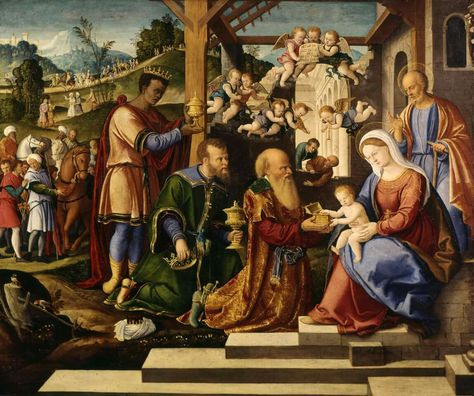
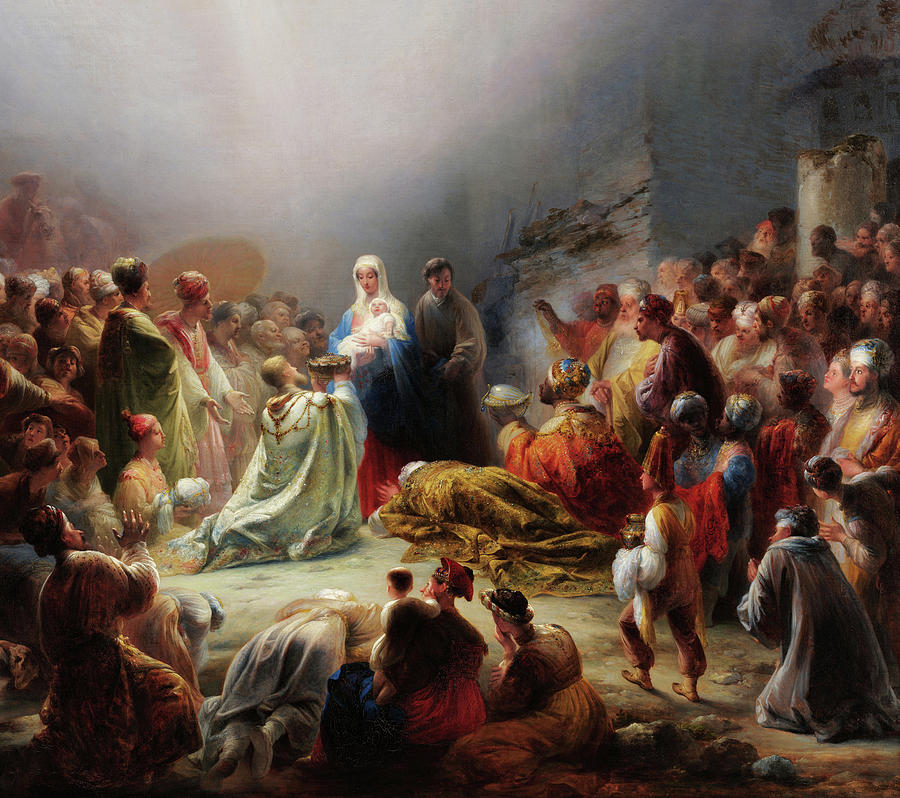
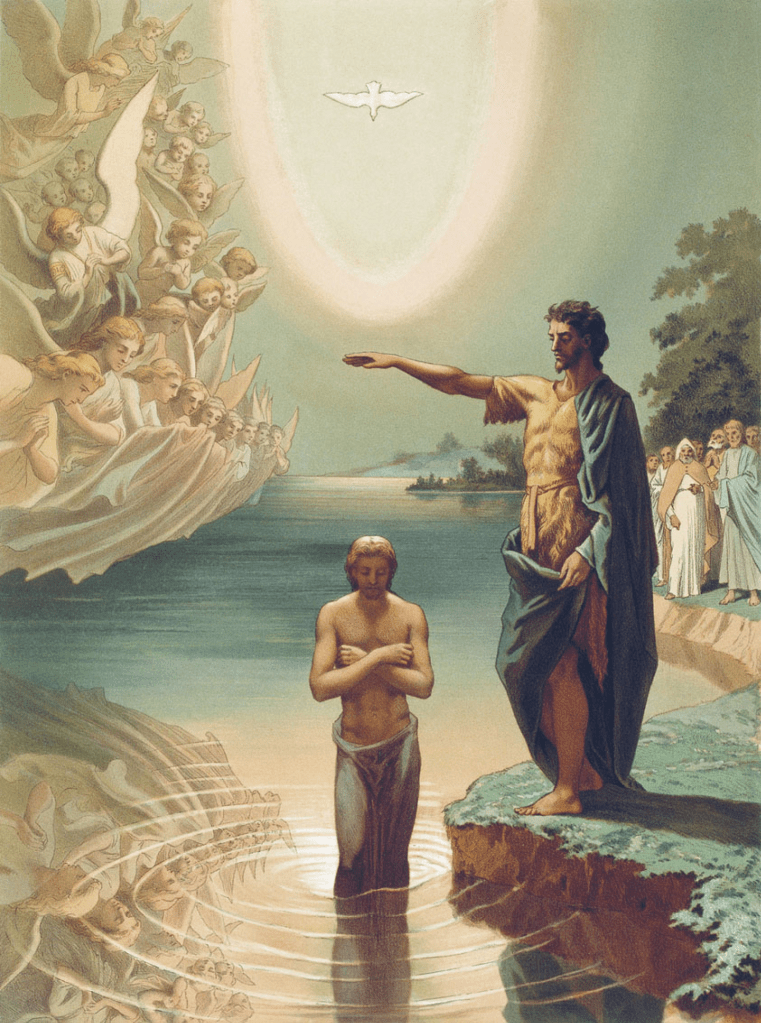
The celebration of Epiphany on January 6 is much older than the celebration of Christmas itself and to some extent is the original celebration of the nativity of Christ. While the Church Fathers of the western church were teaching that the celebration of a birthday was only something pagans do, the eastern church acknowledged the importance of the nativity but combined the celebration with the visit by the Magi, the baptism of Christ, and wedding at Cana with the baptism of Christ being the most important.
The word Epiphany from the Greek for “revelation from above” and in the east the feast is also called the Theophany which means “revelation of God”. The central theme being a declaration of Christ’s messiahship to the nations in the form of the Magi, and the Bridegroom of the Church in his baptism at the Jordan and with the first miracle at Cana. By the fourth century celebrations of the nativity had been moved to December 25 in the west with many eastern churches following suit not long after and by the sixth century the western church had adopted Epiphany as well as part of the standardized Christmas season that marks the end of the 12 Days of Christmas.
Catholic Tradition
In the western church Epiphany has come to primarily memorialize the arrival of the Magi to adore Christ and a separate day has been dedicated to his baptism on the Sunday following Epiphany.
The Magi are also considered to be “Saints” and the first gentile believers in Christ because the scriptures say they “fell down and worshiped him”. Because of this they have come to symbolize how the work of Christ is available to all nations.
Epiphany is also known as “Three Kings Day” and in many countries is nearly a second, although smaller, Christmas with children in some countries receiving their gifts on Epiphany and in Ireland it’s called “Women’s Christmas” where the women have their own celebrations and rest from housework.
Many Catholics will also participate in a house blessing on this day. This is done either by a priest or the father of the house who takes a piece of chalk and writes the year with the initials for the three wisemen and crosses in the middle.
20+C+B+M+25
The traditional names of the wise men are Caspar, Balthazar, and Melchior but the initals also stand for Christius Mansionem Benedicat which translates to “may Christ bless this house”. There are traditional blessings and prayers that are also said by the Father.
Orthodox Tradition
Some Orthodox Churches still observe Christmas on January 6 at the end of the Fast of the Nativity, while others follow the western calendar with Christmas on December 25 and celebrate Christ’s baptism on January 6.
In celebrating Christ’s presentation at the temple and baptism the season is seen as a Christian fulfilment of Hannukah, the Feast of Dedication. At his baptism he was dedicated as the “Lamb of God, which taketh away the sin of the world”, the “beloved” of the Father who was sent to redeem humanity, and as a member of the Godhead.
Church services on this day are similar to those of Christmas and center around the Great Blessing of the Water that is then used to bless and dedicate the congregation and their homes to Christ in that year. In countries that border a sea it is common for the priest to throw a cross into the water to bless the waters and symbolize Christ’s baptism. The cross is then retrieved in a race by those willing to take a plunge into the cold winter waters.
- Orthodox Church in America – Epiphany
- Orthodox Wiki – Theophany
- Eastern Orthodox Spirituality – Epiphany
Individual and Family Activities
- Read Matthew 2
- Spread out the gift giving. Our family saves our family Christmas presents and celebrations for Epiphany. We spend Christmas Day with grandparents and extended family. This spreads out the gift giving season and has taken much of the pressure off of Christmas Day, allowing us to really enjoy the season. Some families will do one present a day over the 12 Days of Christmas.
- Bake a King’s Cake, hide a dried bean or small plastic baby in the batter of the cake, the person who finds it in their slice is “king” for the day and gets to choose the foods and activities for the family.
- Do a house blessing for the new year, you can follow the formula for chalking the front door or create your own blessing. (Church Handbook on dedicating a home)
- Host a 12th Night party with crown and star themed foods, one last round of Christmas carols (including We 3 Kings), give guests crowns to wear, have a white elephant, drink spiced cider called Wassail, and have guests bring their Christmas trees and wreaths for a big bonfire called the “burning of the greens”.

 Discovering the Saints
Leave a comment