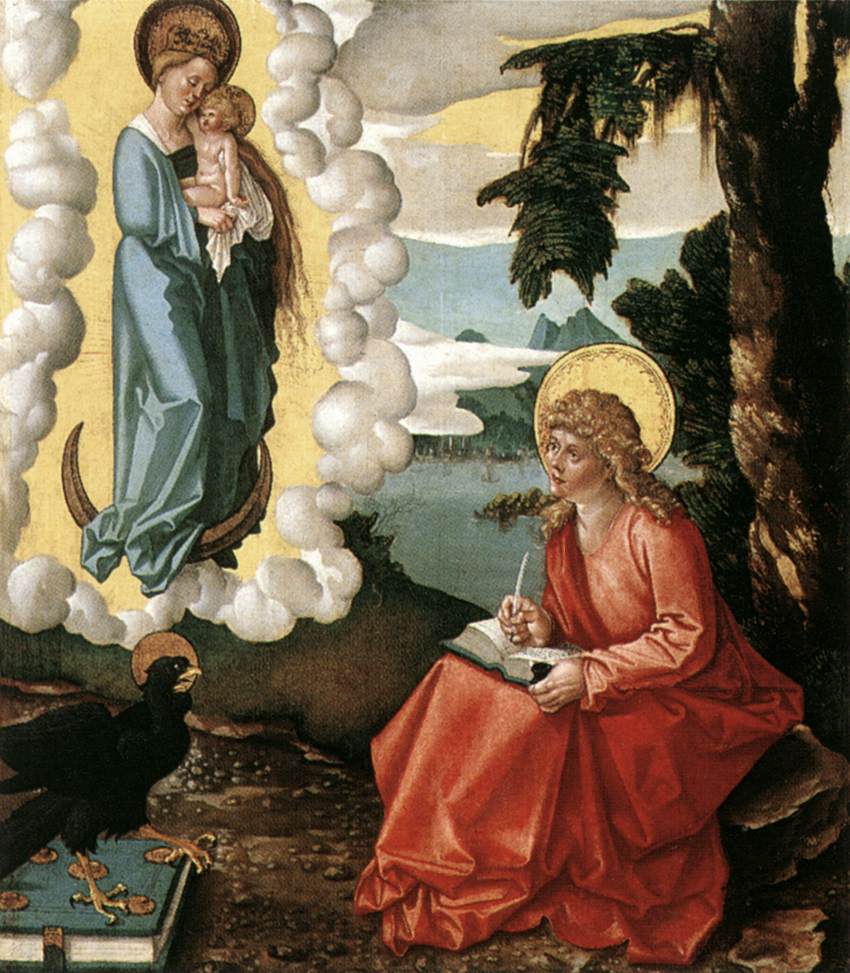
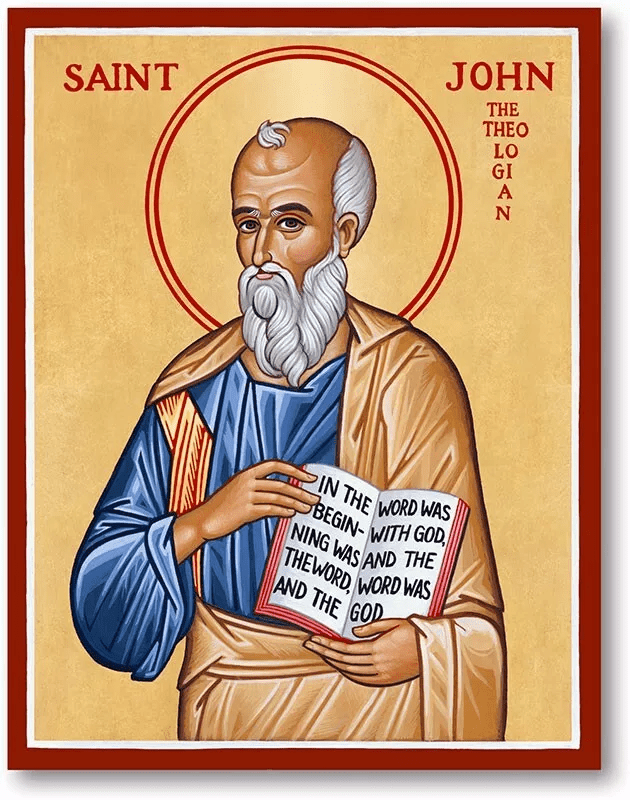
John was the son of Salome and Zebedee, the brother of James the Greater, and a disciple of John the Baptist before he followed Christ. In Catholic tradition his mother Salome was the sister of Mary and in the Orthodox tradition Salome was the daughter of Joseph and step-sister of Christ. In either case these very ancient traditions attest to a close family relationship with Christ. He was one of Christ’s closest companions in life along with Peter and James. He wrote the Gospel of John, 3 letters, and while exiled to the island of Patmos in 90-95 AD received his apocalyptic vision that became the book of Revelation. He described himself as the “disciple whom Christ loved” and was commissioned with the care of Mary by Christ on the cross. Today, near Ephesus, there is a pilgrim site called “Meryem Ana Evi” (House of Mary), which is believed to be the house in which John and Mary lived.
John was assigned the region of Asia Minor for evangelism and was accompanied for most of his life by his disciple St. Prochoros. St. John Chrysostom, one of the early Church Fathers was also his disciple. John’s life was marked by his deep conviction of the love of God. When one young man fell away from the church and became the leader of a bad of robbers John hunted down the band and demanded to be taken to their leader. When the young man saw John he tried to flee from the Apostle who chased him down and said, “My son, be merciful to yourself, because the door of hope is still open for your salvation, and I will be your intercessor before the Lord Christ.” Towards the end of his life when he was so old he could no longer walk on his own he would say only “my children, love one another” when asked to teach.
Legend says that when John felt the end of his life drawing near in the year 100 AD he instructed his disciples to dig a grave for him in the shape of a cross and then bury him in it up to his neck. When his disciples returned to the grave the body of John could not be found. To this day the location of his tomb is well established but unlike other apostles there have never been any relics (body parts) found for John.
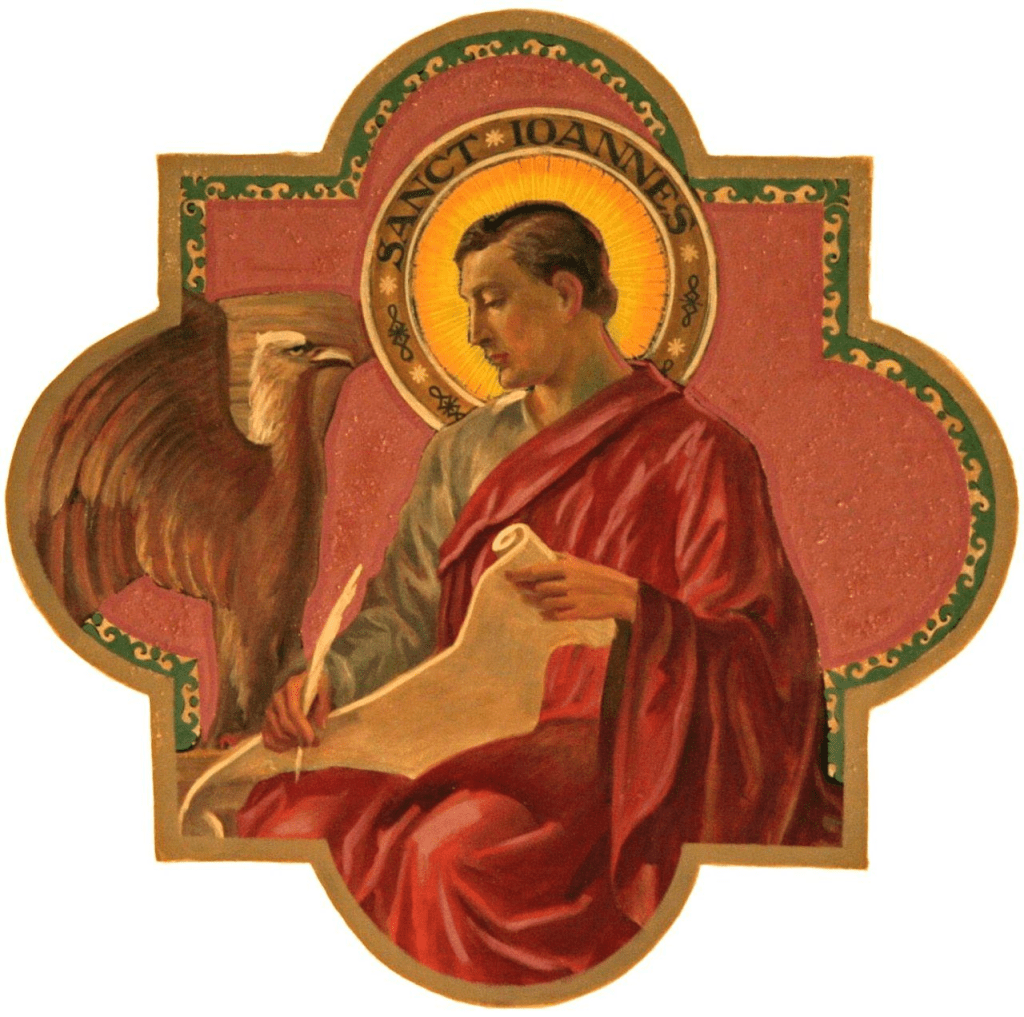
St. John in Christian Art
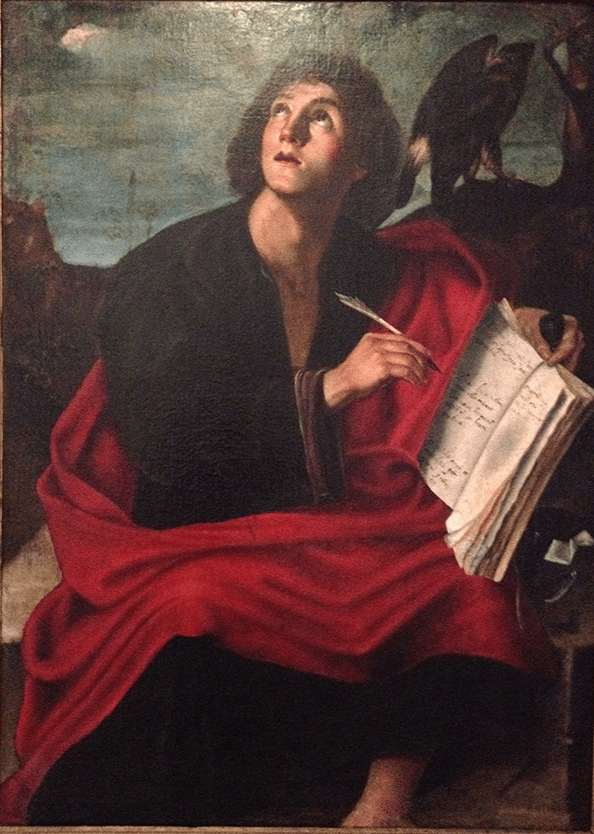
Some of the symbolism used to represent the life story of the Apostle John in Christian art is a cup or chalice and serpent representing the cup of sorrow foretold by Jesus; an eagle rising out of a cauldron referring to being a martyr of spirit, but not in deed; a serpent entwined on a sword; John seated on tomb with book, orb, and sword; eagle on a closed book; or the scroll of his Gospel.
Tradition in the Western Church
His feast day is celebrated on December 27
Tradition in the Eastern Church
His primary feast day is celebrated on May 8 and his repose on September 26. Scripture readings for the feast are the following: At Vespers: I John 3:21-4:6, I John 4:11-18, I John 4:20-5:5. At the Matins: John 21:15-25. At the Divine Liturgy: I John 4:12-19; John 19:25-27, 21:24-25. There are also two hymns dedicated to John.
Family Activities
- Do activities based on the symbols used for St. John. One of the symbols is the Eagle from Ezekiel 1 and Revelation 4:6-9. Catholic Icing has a cute eagle marshmallow pop craft.
- Liahona, January 2019 – John, the Disciple whom Jesus Loved
- CFM activities for the Revelation of John
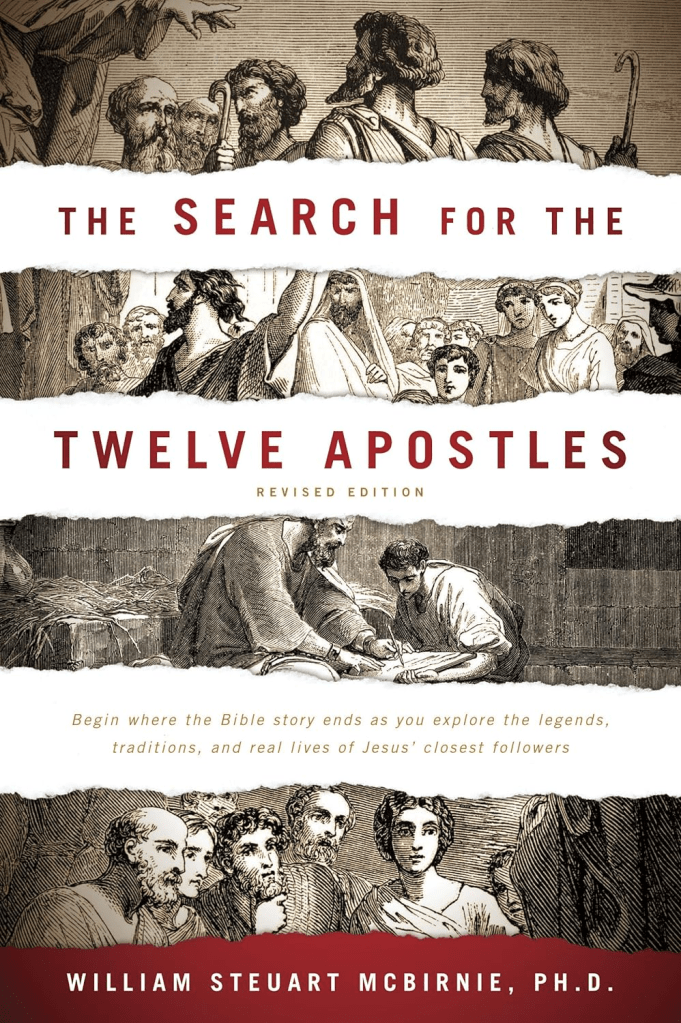
If you would like to read more about the New Testament Apostles and others and what happened to them, I highly recommend “The Search for the 12 Apostles” by William McBirnie.

 Discovering the Saints
Leave a comment