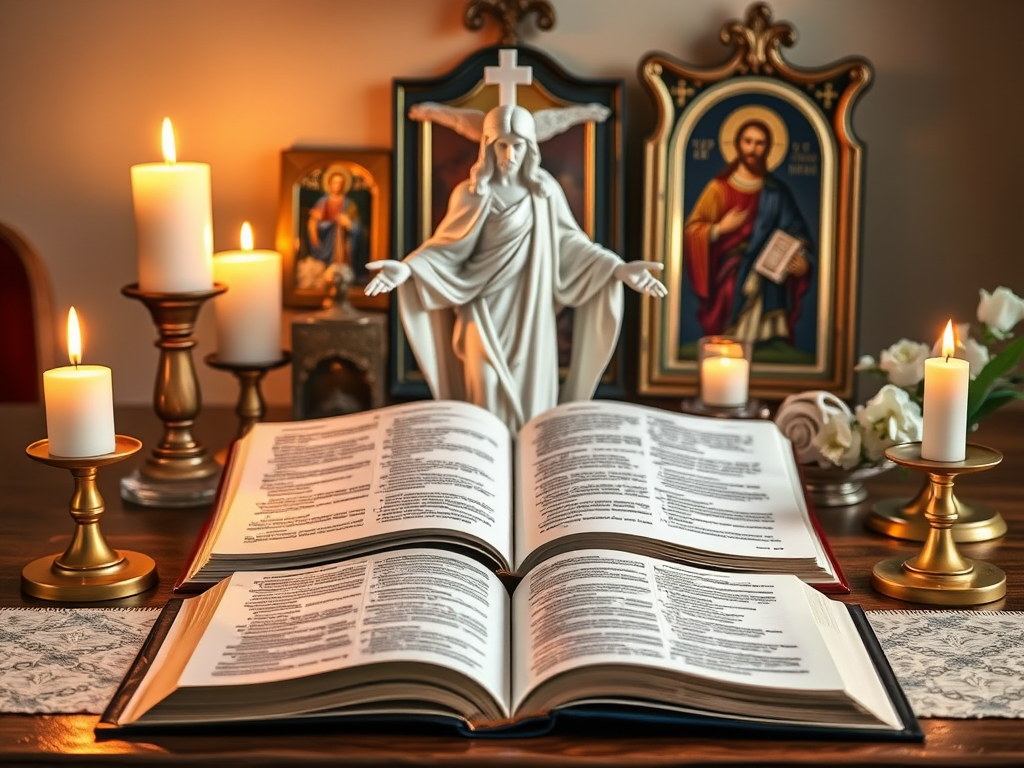
Christians from all different kinds of denominations are rediscovering the beauty and spiritual power of traditional Christian liturgy. The word liturgy is derived from ancient Greek leitourgia, which means “work or service for the people” and refers to the manner in which a religious community participates in “a communal response to and participation in the sacred through activities reflecting praise, thanksgiving, remembrance, supplication, or repentance. It forms a basis for establishing a relationship with God.” Christian liturgy traditionally includes such elements as the Sacrament, listening to the scriptures being read aloud, corporate prayer, baptism, and even elements such as the wearing of ritualistic clothing, hand gestures, and the observance of special holy days with their own unique traditions. Much of which should sound familiar to a Latter-day Saint as the worship in the Temple, both ancient and modern, is liturgical.
The great gift that rediscovering traditional Christian liturgy can bring into our lives is the creation of Sacred Time in our homes and communities. Where the Temple is a Sacred Space that we cannot take with us, time is something that we cannot escape. Many Christians have a well-established practice of setting aside time to focus on the Savior each week by attending church meetings. But creating that intentional and sacred time in our homes on a daily basis can be more challenging in a secular world that increasingly demands our attention, energy, and resources.
A small 2015 study was conducted within a Church of Christ community to measure the impact of introducing the traditional Christian liturgical calendar (the yearly cycle of feasts, fasts, and holy days including but not limited to Easter and Christmas) on spiritual formation. The Churches of Christ have historically avoided any practice that is not explicitly referred to in scripture and view themselves as a movement restoring the original church of Acts. In the congregation studied the community was surveyed at the beginning and end of a liturgical year to measure what impact incorporating elements of traditional Christian liturgy had on spiritual growth. The results of the study showed an increased sense of focus, purposefulness, a greater sense of God’s action and presence in their lives throughout the year, and an increased appreciation for confession, repentance, and self-reflection. The greatest benefits were seen when the liturgical year was repeatedly experienced over time and as part of a community.
Liturgy is at its essence pedagogical. It invites us to experience and embody the story and life of Christ throughout the year. Each tradition was developed over time to educate and form Christians in an age when most people could not read, and lives were governed by nature and the seasons. In our modern age of technology that puts boundless information at our fingertips and buffers us from the effects of nature and changing seasons reengaging with these ancient traditions invites us to slow down and experience Christ in our own seasons of life with our mind, soul, and body. There is a great positive impact on our children as well who are still governed by their bodily impulses and desires, these traditions and practices give them a tangible experience of their own spirituality that forms strong memories, values, and sense of self.
For Latter-day Saints there is an opportunity to receive the benefits of following the cycle of the Jewish and/or Christian year and creating new traditions to remember and learn from the history and teachings of the Restoration. On this site my goal is to provide easy access to information and resources for learning about and incorporating Jewish, Catholic, Protestant, or Orthodox traditions along with information and ideas for incorporating new traditions for the Restoration into our lives.

 Discovering the Saints